Can a tanto become a profitable niche product in your edged weapons lineup?

Each traditional ancient blade stands a beautiful creation of artistry, but imagine you want to demonstrate your individual character? Modifying your gear is a insightful journey, allowing you to construct a truly unique piece. From the tsuka wrapping and sheath to the covering design and tempering curve, each aspect offers a chance for custom touch. This examination delves into the world of katana modifications, providing facts for both novices and experienced enthusiasts pursuing to establish their mark on the traditional art of the samurai.
Starter Verified Fabrication
For people prepared to embark on the satisfying journey of martial arts involving swords , 1060 steel katanas deliver an outstanding entry point. This defined grade of elemental-based steel finds a fine equilibrium between low price and excellence . While lacking compared to hard as elite steels, 1060 facilitates a suitable level of knife work , making it tailored to starters to develop the essentials of blade preservation and understand the allure of handcrafted Japanese weaponry. It’s a wonderful choice for cultivating experience without the capital burden of more specialized steels.
T10 Steel Sabers : Achieving Potency and Expense
Assisting devotees seeking an authentic saber experience without exceeding the capital constraint , T10 metal katanas represent a advantageous option. These armaments offer a clear improvement in resilience compared to basic alternatives, exhibiting decent edge retention and enough flexibility for primary cutting techniques. While not rivaling the outstanding characteristics of superior steels like T100 or folded compound, T10 provides a impressive blend of utility and reasonableness , making them a well-liked choice for newcomers and those on a tight resources .
Transcending the Cutting Surface : Adjusting Your Weapon's Enhancements and Tsuka
Although the honed edge is undeniably the central point of a katana, truly refining its aesthetic lies in the cautious customization of its components and hilt . This art allows enthusiasts to express their inimitable approach . Contemplate the broad possibilities: menuki - decorative decorations that supply visual attraction ; the hamon wrappings – often exquisitely carved ; the tsuka core itself, wrapped in conventional ito lace ; and the fusa finial , which can be fashioned from various materials like ingots or bone .
- Adopt styles that match with you.
- Investigate with distinctive elements .
- Concentrate on craftsmanship for a continuing impression .
The Attraction of the Katana: Legacy, Artistry, and Steelwork
The nihonto contains a unparalleled allure, steeped in phases of Japanese history and custom . More than merely a instrument of fighting , it's a token of the soldier ethos – a fusion of competence and management . Its unfolding spanned score generations, with early arms evolving into the slender curvature and effective edge we understand today. The construction involved is truly impressive , requiring spans of instruction to excel at . The process involves a detailed folding of forged iron , creating layers that improve the sword’s flexibility and shaving ability. Numerous schools of crafting emerged , each with their own secrets and practices for achieving the optimal balance and cleanness - a truly strenuous pursuit.
- Early Katana classes
- The purpose of the traditional blade in fighter class culture
- Ancient fabricating techniques
Determining the Appropriate Steel for Your Armament Project: 1060 vs. T10
Deciding on the appropriate steel is critically important for any weapon project, and the decision between 1060 and T10 can be difficult. 1060 is a favored American composition, offering a decent balance of toughness and endurance, making it somewhat easy to forge. However, T10, a Japanese steel, typically boasts improved wear fortitude and can perhaps achieve a higher peak hardness, although it can be noticeably complex to treat and requires refined heat treatment. Consider your skillset and intended characteristics: for a first-timer, 1060 may be a better basis, while the seasoned smith might prefer the supplementary features of T10.
- Effortlessness of Managing
- Friction
- Conclusive Durability
Accessing Excellence: Progressive Katana Alteration Approaches
Advancing competence in blade refinement extends far beyond basic sharpening. Serious dedicated users are now studying advanced techniques to truly liberate a blade's hidden potential. This involves intricate work with the blade border, utilizing specialized elements for differential hardening and carefully identifying the profile of the hilt guard to optimize balance and efficiency. Beyond purely functional enhancements, artisans are increasingly focused on reaching unparalleled aesthetic splendor, through complex imprinting and layered varnishes that truly transform a katana into a magnum opus.
Shaping Rough Steel into Perfection: Making a 1060 Sword
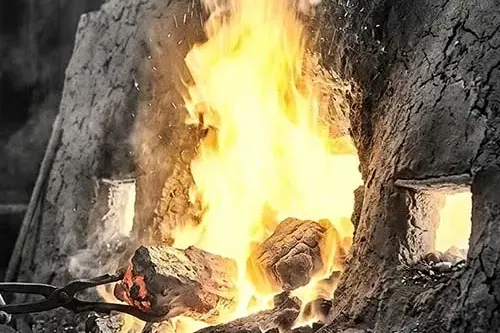
The journey embarks with standard 1060 material , a robust material far distant the sophisticated katana it will develop into. Experienced swords katana bladesmiths apply a detailed process of folding and molding the unrefined steel, repeatedly burning it and pressing it to purify impurities and create a uniform grain structure. This painstaking process, often continuing for periods , builds the crucial sturdiness and malleability characteristic of a authentic Japanese weapon . Subsequent heat methods , including controlled hardening and quenching , are vital to achieve the intended balance of sharpness, stability and splendor .- Combining: Minimizes impurities and builds grain structure.
- Forging: Creates the steel into the initial blade form.
- Conditioning: Defines the final hardness and flexibility.
The Enduring Appeal of the Katana: A Deep Dive into Steel and Customization
Such historic katana survives a forceful symbol for Japanese custom , its allure far outstripping mere martial implements . Forged from select steel and sometimes featuring intricate ornaments , the method of creation itself is a esteemed art. Beyond the fundamental craftsmanship, the ability to tailor a katana - from the temperation to the hilt wrapping and band - provides for a genuinely individual representation for both worshippers and practitioners alike. This fusion of legacy steelwork and boundless personalization creates the katana's continued appeal across the planet .